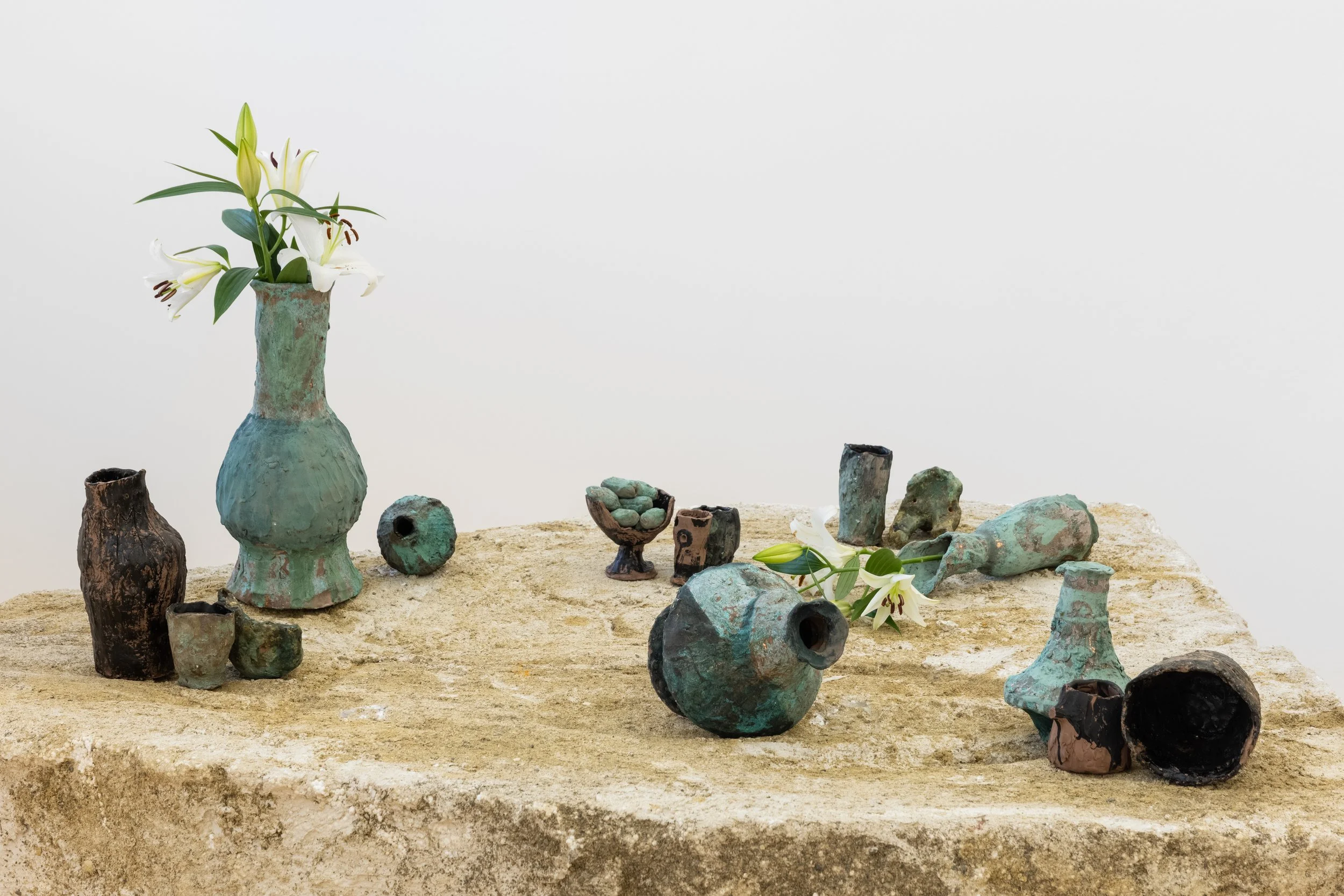
AHA X WEST DEAN:
Emii Alrai and Beverley Butler
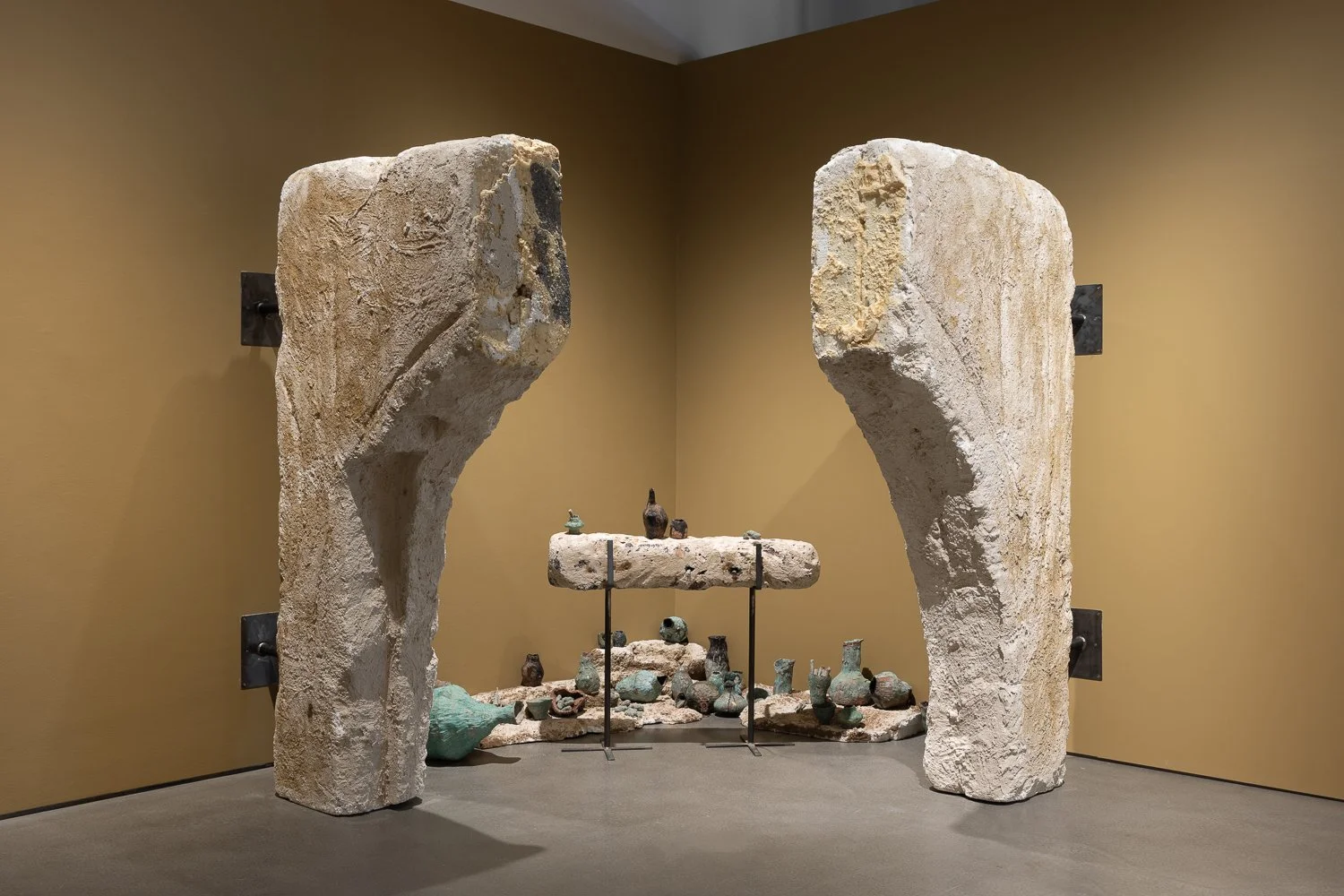
Emii Alrai ‘Capture’, exhibition at Towner in 2025
image credit : Rob Harris
This spring, we’re pleased to share a collaborative programme between the Archaeology–Heritage–Art Research Network and West Dean College. This series of online talks brings together artists, academics, and writers whose work engages with, and at times subverts, the practices, politics, and theories of archaeology, critical heritage studies, contemporary art, and craft.
Our fourth event welcomes artist and Emii Alrai and archaeologist Professor Beverley Butler.
This talk has been postponed due to unforeseen circumstances, new date coming soon in July!
You can still register for the zoom link here and we will send you an email with the details.
Emii Alrai is an artist whose work considers heritage, nostalgia and the colonial legacies of artefacts. Working primarily in sculptural installation she draws on the languages of museums and archaeology to question how history is constructed, romanticised and ultimately displayed. Alrai often creates large-scale sculptural environments that resemble museum dioramas or archaeological ruins. Mimicry and theatricality are at the heart of the work, with forms covered in gypsum, sand, tar and various pigments to create monumental environments that replicate the ideas of a romanticised past and the histories of archaeological excavation. In this material exploration in relation to bodies of research, Alrai’s practice allows for conversations around memory, nostalgia and language to surface critiquing current structures of rigidity and how these may stem from the lasting shadow of imperialism. Beyond merely critiquing or reproducing these structures, the work’s bending of time and space imagines ways in which to go forward in our understanding of history, its retelling and its romanticism and opens dialogue with the ways we engage history in our construction of the future.
Emii Alrai lives and works in the UK. Solo exhibitions include Capture, The Towner Eastbourne, 2025; River of Black Stone, Compton Verney, UK, 2025; A Lake as Great as its Bones, Maximillian William, London, UK, 2024; Lithics, Quench Gallery, Margate, UK, 2024; A Core of Scar, The Hepworth Wakefield & iniva, Wakefield, UK, 2022; and Reverse Defence, Workplace Foundation, Newcastle, UK, 2022.
Previous group exhibitions include Fragment & Form, Henry Moore Institute, Leeds 2025, Déjà Vu, Bold Tendencies, London, 2025, Ceramics Friends: 5th Virginia McClure Ceramic Biennale, McClure Gallery, Montréal, Canada 2024; A Permanent Departure for Nostalgia, A Rehearsal on Legacy with Zaha Hadid, Contemporary Arts Centre, Cincinnati, USA, 2023; and And the Mirrors are Many, Warehouse 421, Abu Dhabi, United Arab Emirates, 2022.
Beverley Butler is Professor of Cultural Heritage and Memory Studies at the UCL Institute of Archaeology, where she has played a leading role in shaping cultural heritage studies as a critical and interdisciplinary academic field. Throughout her career at UCL, she has contributed to establishing and advancing innovative theoretical and methodological approaches to heritage studies, with a particular focus on the relationships between cultural heritage, memory and care.
Her research centres on three intersecting themes: critical perspectives on cultural heritage, cultural memory, and “heritage care”, especially in contexts of cultural dislocation, conflict and extremis. A central thread running through her work is the exploration of the non-clinical efficacies of heritage and the ways in which heritage practices can contribute to wellbeing, recovery and psychosocial care. This has informed collaborative work with asylum seekers, refugees, minority communities and cancer patients, connecting heritage research with creative health interventions, clinical contexts and wider public engagement.
Butler’s research has contributed significantly to debates in critical heritage studies, and her publications have introduced influential concepts including the “efficacies of heritage”, “heritage fevers”, “heritage syndromes”, “heritage as pharmakon”, “heritage pharmacology” and “heritage beyond power”. Alongside her theoretical work, she has undertaken long-term ethnographic research in Egypt, Palestine and Jordan, examining the social and political dimensions of heritage, memory and cultural revivalism. Her work bridges archaeology, art, heritage and public practice, and she is internationally recognised for developing new ways of understanding the cultural, ethical and affective dimensions of heritage in contemporary society.
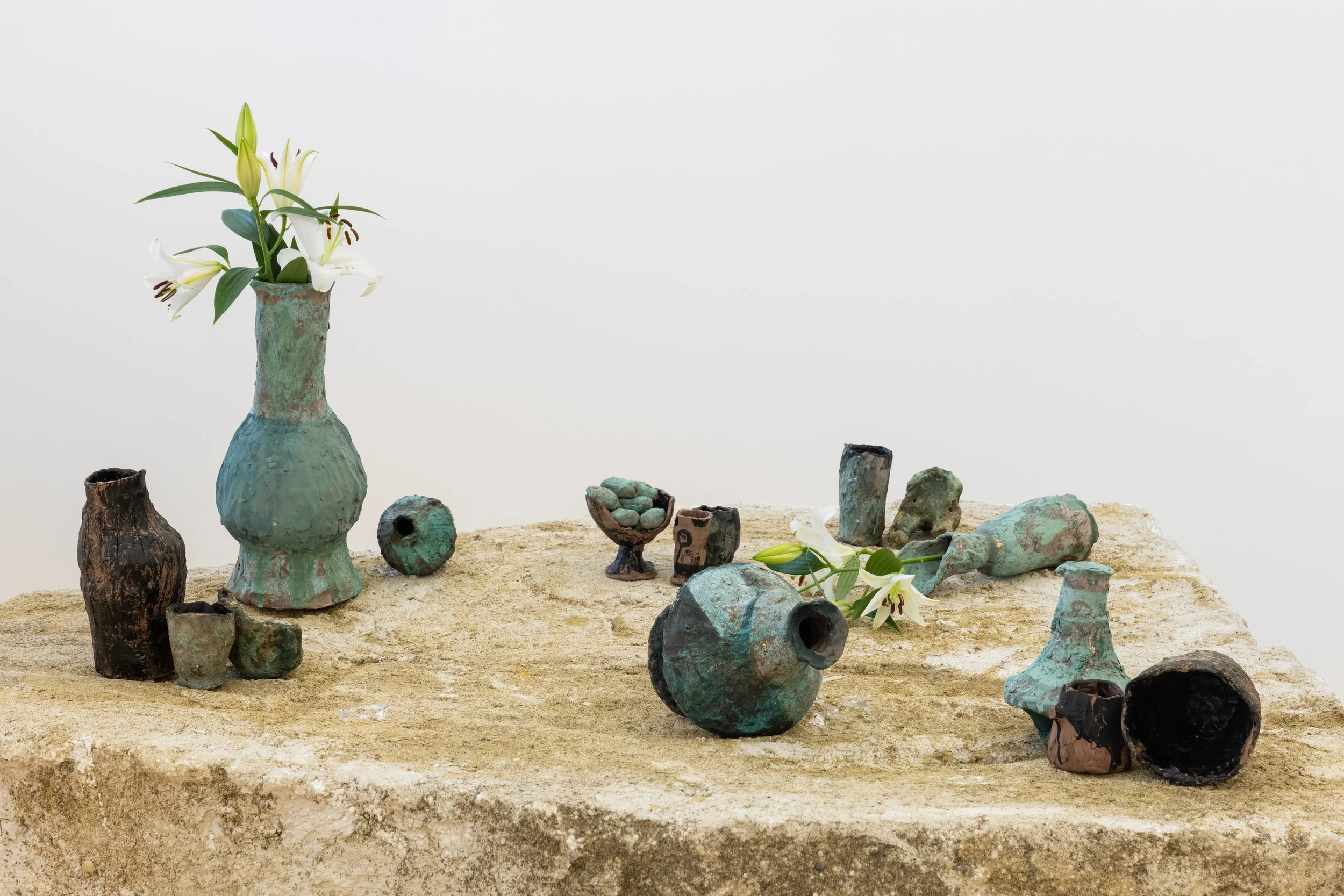
Emii Alrai ‘Ecdysis’ at Staffordshire Studios
image credit : Emii Alrai